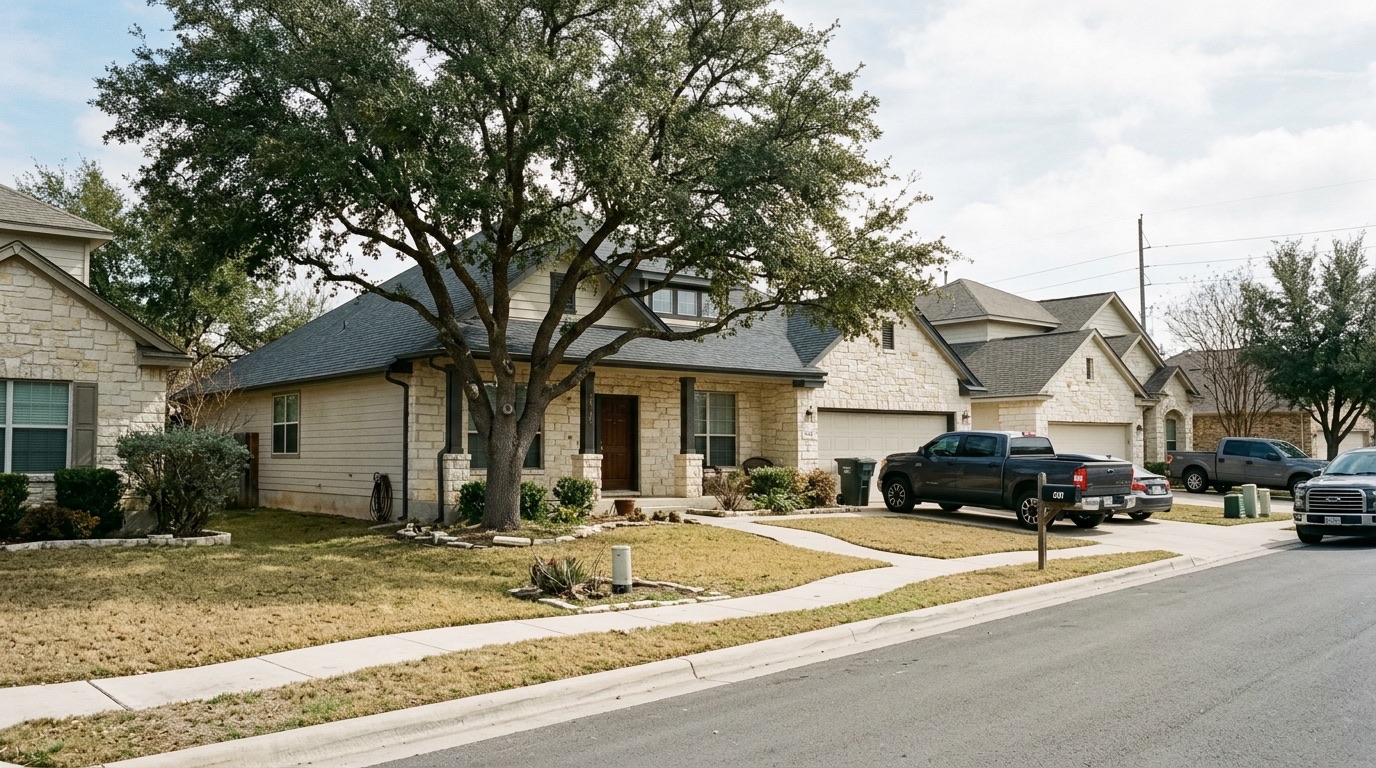
When mold shows up in your Leander home, you want quick action, not delays. We offer mold removal Leander TX residents can schedule promptly, serving Travisso, Crystal Falls, Block House Creek, and neighborhoods near the 183A toll corridor. Check the towns on our regular route to see if we cover your area.
Why Mold Appears in Leander Homes
Leander has grown rapidly, with most houses built from 2010 onward to meet demand. These tightly insulated homes are energy-efficient but allow little drying when moisture seeps in. Unlike older, drafty houses, a slow leak or poorly sealed window can saturate drywall before you notice any problem.
Central Texas' humidity adds to the challenge. Summers in Williamson County can increase indoor humidity, especially if your HVAC system isn't appropriately sized or if return-air paths are blocked. This leads to condensation on cold surfaces within walls, attic spaces, and exterior frames, creating perfect conditions for mold growth.
Block House Creek neighborhoods have endured enough storm-related water intrusion to make post-rain inspections a good habit. Meanwhile, Crystal Falls and Travisso, with their varied topography, sometimes face drainage issues that direct water toward foundations and garages.
Common Mold Issues We Handle in Leander
Mold problems in Leander often stem from a few recurring causes:
- Attic moisture from poor ventilation. New constructions in Leander often feature tight roof decks with spray foam. When ventilation isn’t balanced properly, humid air builds up, leading to chronic condensation on wood surfaces. We tackle upper-level ventilation problems comprehensively on that page.
- Bathroom and laundry room failures. These spaces, especially in newer tract homes, are frequent mold sources. Issues like slow supply line leaks, failed caulking, and condensation-prone walls behind showers often result in hidden mold.
- HVAC closets and mechanical rooms. Air handlers in tight closets may cause condensation onto nearby surfaces, especially if the door remains closed and airflow is limited.
- Crawl spaces and slab cracks. Though most homes in Leander are slab-on-grade, older properties and additions may have partial pier-and-beam sections. If ground moisture accumulates and the vapor barrier is compromised, mold can thrive on subfloor framing.
- Post-flood drying failures. When homeowners use box fans rather than commercial drying equipment, surfaces may dry before wall cavities do, allowing mold to establish inside walls, later discovered during renovations.
For further details on how we handle materials and disposal, visit the specifics on that page.
Our Mold Remediation Process in Leander
We adhere to the IICRC S520 guidelines, which outline containment, air handling, and material removal procedures. Here’s how we proceed:
- Visual inspection and moisture assessment. We document each surface with elevated readings and visible growth using calibrated moisture meters. Photos become part of your project file.
- Containment. We seal the work area with polyethylene barriers and use HEPA-filtered air scrubbers to maintain negative pressure. This keeps spores within the work zone.
- Material removal. Drywall, insulation, and unsalvageable material are removed in sealed bags. Salvageable framing is treated with a HEPA vacuum before further treatment.
- Surface treatment. We apply an EPA-registered antimicrobial agent to all affected surfaces and document the treatment.
- Drying. Commercial dehumidifiers and air movers are used until moisture levels return to normal. We ensure thorough drying before considering the job done.
- Clearance referral. We don’t perform lab sampling. Texas law separates mold remediation from assessment. For post-remediation verification, we connect you with independent Mold Assessment Consultants.
What Mold Removal Costs in Leander
Costs depend on the size of the affected area, material types, and contamination spread. Most projects in the Austin area range between $1,433 and $6,000, with an average of about $3,509, as per Angi's Austin mold remediation data. Rates per square foot typically range from $10 to $25.
In Leander, a bathroom with localized drywall issues might cost between $1,200 and $2,200. An attic job involving contaminated insulation and treated deck boards can range from $1,500 to $4,000, based on square footage. We provide a written estimate after an inspection, before any work begins.
Why Leander Homeowners Choose Us
We hold a TDLR Mold Remediation Contractor license (), required by Texas law for professional mold remediation. Our technicians are IICRC-certified and follow S520 procedures.
We do not perform assessments. If a formal assessment or post-remediation verification is necessary, we refer you to independent licensed Mold Assessment Consultants, ensuring the transparency of work performed.
We respond to inquiries within 24 hours and can often schedule inspections the same week. Send us a note via the contact form. to begin.
We're also available for homes around Twin Creeks in Cedar Park or for properties in our Lakeway coverage page by the Lake Travis area.
Frequently Asked Questions
How much does mold removal cost in Leander, TX?
Project costs range from $1,200 to $5,000 for residential properties, depending on the affected area and material type. A single bathroom with localized damage is at the lower end, while an attic with contaminated insulation covers more. We provide an itemized estimate post-inspection, avoiding surprises.
Do you perform mold testing?
We don't conduct lab mold sampling. The rules in Texas require separate licenses for mold remediation and assessment. We perform a thorough visual inspection and moisture assessment. For formal protocols or post-remediation verification, we partner with licensed Mold Assessment Consultants.
Why is new construction in Leander still at risk for mold?
Although energy-efficient, buildings constructed after 2010 don’t breathe like older ones. Moisture from leaks or an undersized HVAC system gets trapped inside due to tighter insulation, hindering natural drying.
How long does remediation take?
A small job typically takes 1-3 days, including drying. Larger projects covering multiple rooms or attic spaces may take 3-5 days. We offer realistic time estimates during inspection, avoiding unexpected extensions.
Will homeowner’s insurance cover this?
Texas policies often cover mold remediation if caused by a sudden, covered event like a burst pipe. Long-term neglect or slow leaks are generally not covered. Document the water event and notify your adjuster before remediation begins. We provide necessary documentation to support claims.
Are you licensed to work in Williamson County?
Yes, we hold a TDLR Mold Remediation Contractor license (), valid throughout Texas, including Williamson County. Verify our license via the TDLR website. We carry the required liability insurance, and our technicians are IICRC-certified.
set up a site visit through our online form. We serve Leander, Travisso, Crystal Falls, Block House Creek, and the surrounding Williamson County area.