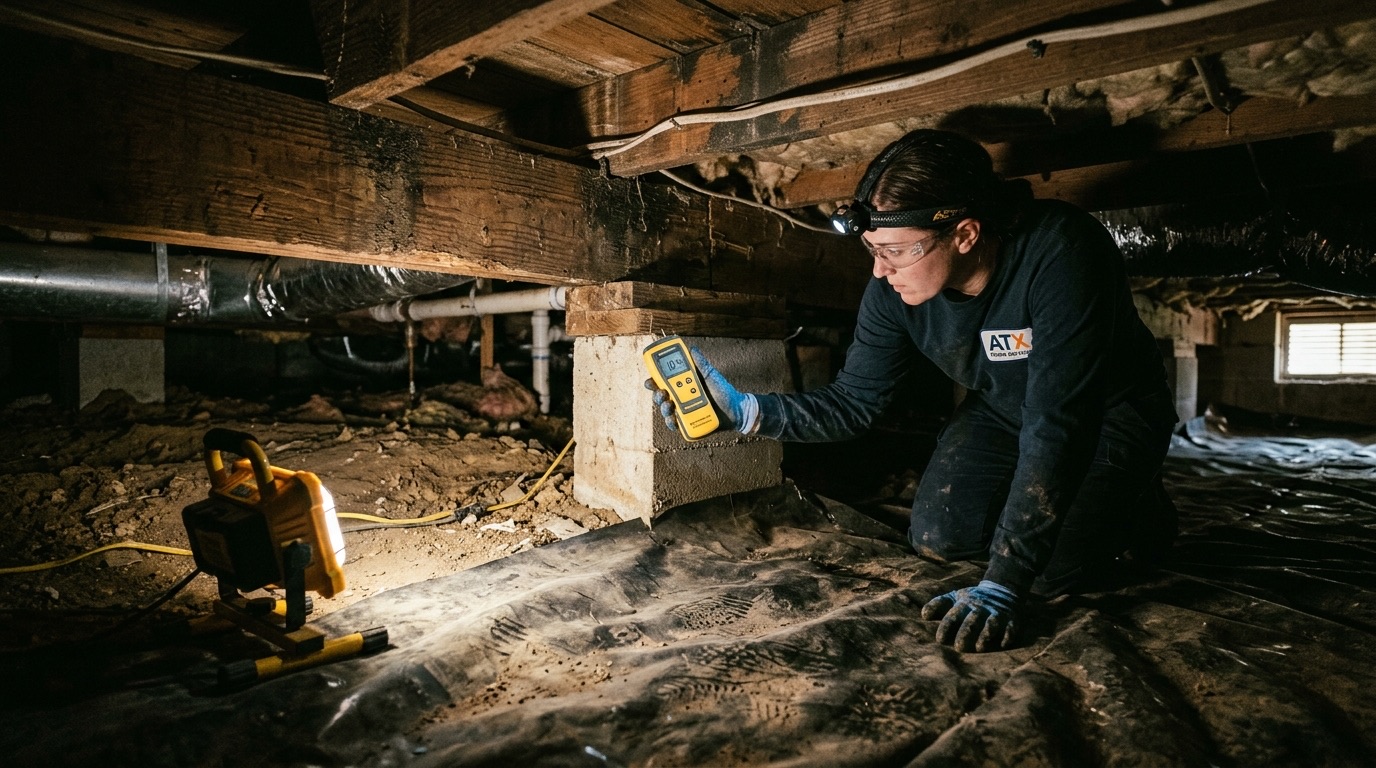
Crawl space mold can often appear when you least expect it: during a home sale, after plumbing issues, or when that unmistakable musty odor seeps through your floors. In older neighborhoods across the Austin metro and the Hill Country, pier-and-beam construction is typical. These open crawl spaces are particularly susceptible to moisture build-up, leading to mold growth on the sub-floor framing. If you're dealing with an issue beneath your house, we'll inspect it, evaluate it, and get it cleaned up.
You can compare our remediation, abatement, and visual evaluation work to comprehend the complete range of services before you call.
Crawl Space Mold in Central Texas: The Context
In neighborhoods like Hyde Park, Tarrytown, Travis Heights, and areas in San Marcos, Bastrop, and Georgetown, many homes sit on pier-and-beam foundations. This setup typically involves a vented or partially enclosed crawl space under the floor joists, often becoming the most humid section of a home.
Central Texas ground moisture can surprise homeowners. Even during dry summers, the soil retains moisture from winter and spring rains. Locations such as the Brushy Creek drainage basin, the Guadalupe River corridor, and areas near Lake Travis have terrain that keeps groundwater near the surface. When this moisture evaporates without proper management, the floor joists and sub-floor sheathing remain damp for extended periods.
What Causes Crawl Space Mold
Lack of a barrier or a damaged one: A ground-level vapor barrier is crucial to block soil moisture from seeping into the crawl space. Many older homes lack this barrier, while those that were installed decades ago may have tears or incomplete sections that allow moisture penetration.
Inadequate venting: Building codes have varied on vented vs. conditioned crawl spaces. Many Austin homes have vents that are either blocked, undersized, or poorly located, leading to areas where moisture accumulates instead of dissipating.
Leaking pipes: A slow leak from a supply line or drain pipe can saturate the soil and framing for months before discovery. This scenario falls into the handling growth from a covered water peril category, necessitating insurance involvement.
Flooding events: Areas along the Onion Creek and Walnut Creek watersheds have faced repeated flooding. Communities like Bastrop have seen crawl spaces flooded with standing water, leaving wet framing that encourages mold even post-drainage.
What We Find During a Visual Evaluation
Evaluating a crawl space for moisture requires hands-on work. We investigate under your house with moisture meters and a camera, scrutinizing each segment of the sub-floor framing, joists, and rim joist. Starting with the moisture-mapping site visit is a prudent initial step before committing to an extensive scope.
We document visible mold presence, assess wood and soil moisture levels, evaluate the vapor barrier's state, and identify moisture sources. This evaluation helps us outline the job before providing an estimate.
When we identify heavy mold growth on the joists, it often indicates the most damaging variety we treat. We'll explain our findings and the implications for your remediation plan.
Our Crawl Space Mold Removal Process
Every crawl space project follows the IICRC S520 Standard for Professional Mold Remediation. Here's our approach:
- Isolation and access control: We seal the crawl space entry and employ HEPA-filtered negative air pressure to prevent spores from spreading into the living area during remediation.
- Removal of contaminated materials: Moldy insulation between joists, defective vapor barriers, and other debris are first to go, all sealed in poly bags for disposal.
- HEPA vacuuming: The framing, joists, and sub-floor undergo HEPA vacuuming to eliminate loose spores before treatment.
- Wood surface treatment: Sanding or media blasting cleans affected framing. Compromised wood is reviewed for possible sistering or replacement. Find more insights on our comprehensive work from containment to drying at how we run the full project from containment to dryout.
- Antimicrobial application: An EPA-approved antimicrobial is applied to treated wood and adjacent areas with high moisture readings.
- Structural drying: Desiccant or refrigerant dehumidifiers and air movers run until wood moisture levels stabilize. This step is vital for lasting results.
- Vapor barrier installation or repair: We place a 10-mil or 20-mil reinforced poly vapor barrier on the ground, secured at seams and footings. For homes benefiting from full encapsulation, we extend the barrier up foundation walls and seal vents.
- Dehumidifier placement if required: Some spaces gain from a permanent dehumidifier, particularly in low-lying areas prone to persistent moisture.
What Crawl Space Mold Removal Costs in Austin
Project costs differ depending on space size, mold extent, structural repairs, and encapsulation requirements. According to Angi's Austin mold remediation cost guide, regional fees range from $1,433 to over $6,000 based on size and severity, averaging $10-$25 per square foot.
A crawl space with surface mold and a basic vapor barrier update costs much less than one involving joist repair, encapsulation, and permanent dehumidification. We provide a detailed written estimate before starting any work.
Insurance coverage varies based on whether the cause is a covered peril. Sudden pipe bursts might be covered, unlike mold from long-term vapor issues. Your insurance adjuster can clarify your policy's specifics.
Why Central Texas Homeowners Trust Us
Holding a TDLR Mold Remediation Contractor license () through Texas Occupations Code Chapter 1958, our crew is IICRC AMRT certified, and we implement IICRC S520 protocol on all projects. When needed, we align with independent licensed Mold Assessment Consultants for remediation protocols or post-verification, as Texas law mandates separation of these roles to safeguard you.
We respond to every inquiry within 24 hours. reach the dispatch desk to get scheduled.
Frequently Asked Questions
How much does crawl space mold removal cost in Austin?
Projects generally range from $1,500 to $5,000 depending on the crawl space's size, mold spread, and whether structural fixes, encapsulation, or dehumidifier placement are necessary. We ensure you receive a detailed estimate before beginning.
Do you do mold testing?
We don't conduct lab mold sampling. Texas licensing keeps assessment separate from remediation. We cooperate with independent licensed Mold Assessment Consultants for protocols or verification when required and can recommend one if needed.
What's the difference between vapor barrier installation and full encapsulation?
A vapor barrier is a poly sheet at ground level to block soil moisture from entering. Encapsulation extends this barrier up the walls, sealing vents, creating a semi-conditioned space. Encapsulation typically regulates humidity better but costs more. The decision depends on your crawl space's venting, groundwater levels, and budget.
How long does crawl space mold remediation take?
Remediation and drying setup usually span one to two days, but structural drying may require equipment to run longer to reduce wood moisture to acceptable levels. We'll outline the timeline based on initial findings.
Does homeowners insurance cover crawl space mold?
It depends on the cause. Coverage may apply to sudden water events like a burst pipe flooding your crawl space. Gradual mold from soil moisture or failed barriers often isn't covered. Your adjuster can review your policy details.
Why are pier-and-beam homes more vulnerable to crawl space mold?
These foundations leave a gap between ground and floor. Without a continuous vapor barrier and proper ventilation, moisture accumulates year-round. Hill Country soil retains water longer than expected, and high humidity in spring and fall sustains mold in unmanaged crawl spaces. Slab foundations avoid this issue due to the lack of air gaps for moisture.
Are you licensed?
Yes. We hold a TDLR Mold Remediation Contractor license () per Texas Occupations Code Chapter 1958, and our technicians are IICRC AMRT certified. You can verify our license via the TDLR portal. Our work adheres to the IICRC S520 standard on every project.