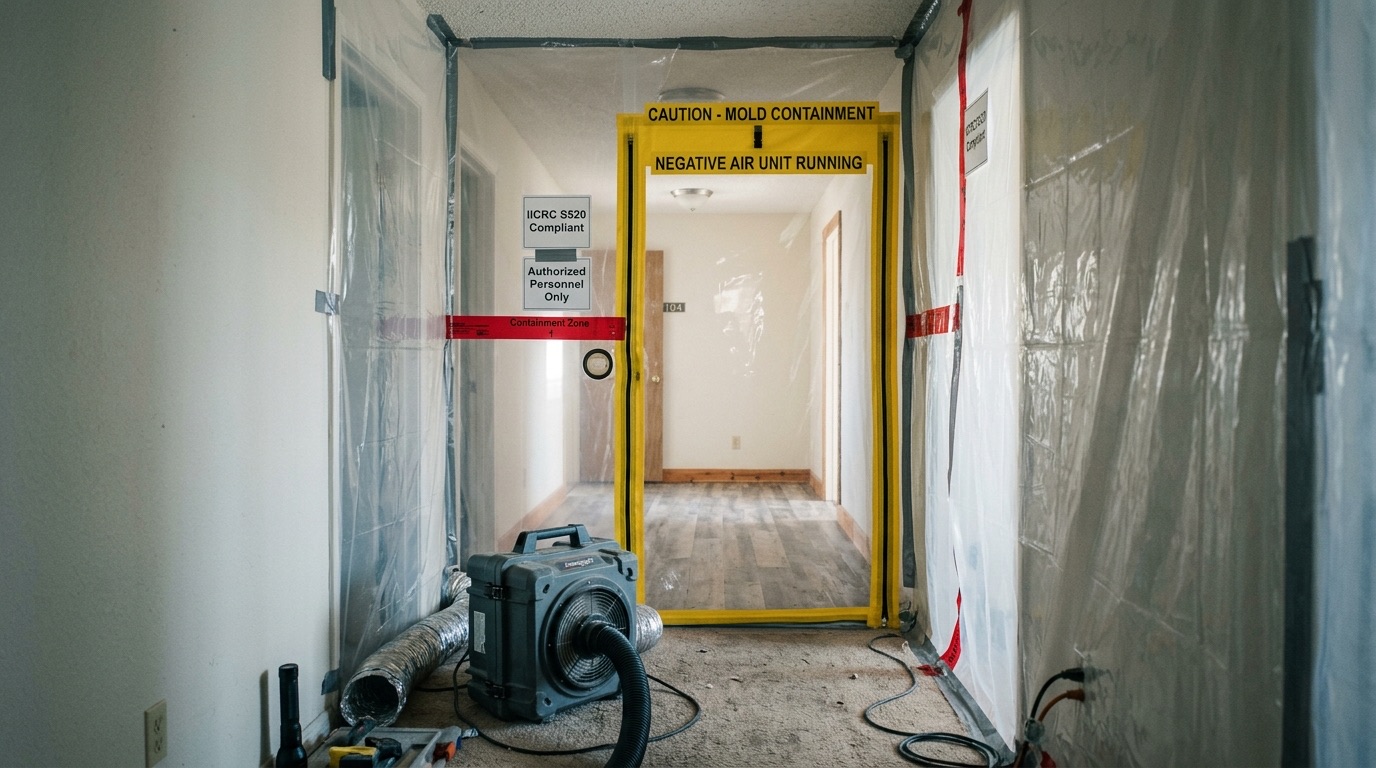
Mold remediation in Austin, TX, requires more than just addressing visible surfaces. For effective mold remediation Austin TX, you must tackle the source and remove contaminated material, ensuring the structure is dry and safe for use. We treat each project uniquely and use a methodical approach encompassing written protocols, negative air pressure containment, and thorough completion planning.
What Mold Remediation Looks Like in Central Texas
Central Texas presents specific challenges to your building. With Austin's humidity frequently exceeding 70 percent and Lady Bird Lake's damp surroundings, mold can thrive. A slow roof leak or inactive window unit creates prime conditions for mold to spread across drywall, insulation, or framing.
Homes on pier-and-beam foundations in Hill Country are particularly susceptible. After heavy rains, crawl spaces near Brushy Creek or the San Gabriel River remain wet, sometimes for weeks. In homes across Williamson and Hays County, mold spores can circulate through HVAC systems unless promptly addressed. Therefore, remediation here extends beyond visible stains.
Common Triggers We See on Central Texas Jobs
Mold issues commonly arise from scenarios such as:
- Roof and attic leaks following spring hail or freeze events
- Plumbing issues like burst pipes, failing supply lines, and slab leaks
- Storm flooding from Travis County drainage overflow or Guadalupe River backflow
- HVAC condensate problems leaving ceilings or subfloors soaked
- Foundation moisture in crawl spaces of Bastrop and Comal counties
Storm and freeze-driven moisture cleanup is a seasonal norm across the region. Mold can develop quietly as moisture goes unnoticed over time.
Our Mold Remediation Process
We adhere to the IICRC S520 Standard for Professional Mold Remediation. When a written protocol is necessary, a licensed Mold Assessment Consultant (MAC) creates the plan, ensuring those who design the work do not execute it, thereby safeguarding your interests.
1. Visual Evaluation and Moisture Assessment
An in-person visual review is crucial before containment begins. We'll map the affected zones, use moisture meters and thermal imaging to identify moisture sources, and determine the scope of work.
2. Containment and Negative Air Pressure
We isolate the work area with poly barriers and create negative air pressure using HEPA-filtered air scrubbers to prevent cross-contamination within the building.
3. HEPA Filtration and Air Scrubbing
Our air scrubbers operate continuously, capturing particles as small as 0.3 microns. Spores are removed from the air until it is confirmed safe within the containment zone.
4. Removal of Contaminated Materials
We remove and discard materials like drywall or insulation that can't be cleaned effectively. Further details are available on our how we tear out and clean affected materials. Non-porous structures are HEPA-vacuumed and scrubbed.
5. Structural Drying
It's essential to dry the framing or subfloor after removing mold-infested materials. We use commercial dehumidifiers and air movers to achieve target moisture levels, as skipping this step is a key reason for remediation failures.
6. Antimicrobial Treatment
Post-drying, we apply an EPA-registered antimicrobial solution to mitigated surfaces, curbing residual contamination and future growth risks. We also handle coil and supply line decontamination due to their role as secondary reservoirs.
7. Post-Remediation and Restoration
Once work concludes, we arrange for the MAC to verify post-remediation if required. Upon passing, we proceed with restoration, reinstating drywall, insulation, paint, and finishes to restore the space to its pre-loss state. Our commercial-scale cleanup jobs adapts these steps to various building types.
What Mold Remediation Costs in Austin
Remediation expenses vary based on square footage, materials involved, and moisture penetration depth. According to Angi's cost guide, most homeowners in Austin pay $1,433 to $6,000. The average sits around $3,509. Rates typically range from $10 to $25 per square foot.
Smaller tasks may cost less, whereas extensive jobs, involving structural parts or HVAC systems, are at the higher end. We provide detailed proposals post-evaluation, never from photos.
Insurance and Mold Remediation
Texas homeowners' policies handle mold differently. Coverage usually applies to mold from sudden events like a burst pipe but not from gradual leaks. We comprehensively document the process for your insurance claims.
When insurance requires a written plan, we introduce you to an independent licensed MAC to create it. The remediation is then conducted as per their instructions, aligning with insurance expectations.
Why Homeowners and Businesses Across Central Texas Trust Us
We are licensed as a TDLR Mold Remediation Contractor (License #), and our team holds IICRC AMRT certification. Our insurance meets property manager standards.
Projects needing a written protocol or verification always involve independent licensed MACs, complying with Texas law for comprehensive oversight.
We respond within 24 hours to requests from Travis, Williamson, Hays, Bell, Bastrop, and Comal counties. Reach us anytime through our contact form or through our call or message us.
Frequently Asked Questions
How much does mold remediation cost in Austin?
Austin remediation costs range between $1,433 and $6,000, averaging around $3,509. Smaller projects, such as single wall remediation, tend to cost less. Higher costs are associated with multiple rooms, structural parts, or HVAC involvement. We provide a quote post-evaluation.
Do you do mold testing?
We don't conduct lab sampling due to Texas regulations. Instead, we partner with licensed Mold Assessment Consultants for protocols or post-remediation work requiring testing.
How long does mold remediation take?
Residential projects usually range from two to five days from start to structural drying. Larger or complex jobs may take longer. We provide timelines during the initial work scope assessment.
Will mold come back after remediation?
Mold recurs if moisture sources aren't resolved. By ensuring original leaks or moisture issues are fixed and structures are dried, recurrence is unlikely. Antimicrobial treatment provides an additional safeguard.
Will my homeowner's insurance cover mold remediation?
Coverage depends on the cause. Texas policies typically cover mold from sudden events like burst pipes, but not slow leaks or moisture issues. We document thoroughly and will connect you with a MAC if a written protocol is needed.
Are you licensed and certified?
Yes. Our TDLR Mold Remediation Contractor license and IICRC AMRT-certified team ensure adherence to industry standards.
What's the difference between mold remediation and mold removal?
Removal involves discarding contaminated materials, while remediation includes containment, air filtration, removal, drying, treatment, and post-work steps. Think of removal as part of the comprehensive remediation process.
For a broader look at the cleanup, mitigation, and inspection work we provide, look at every project type we cover. Many remediation jobs begin when a homeowner asks us to request an on-site visual review before any containment goes up. After major weather events, we also handle after-storm and freeze cleanup projects across the metro.