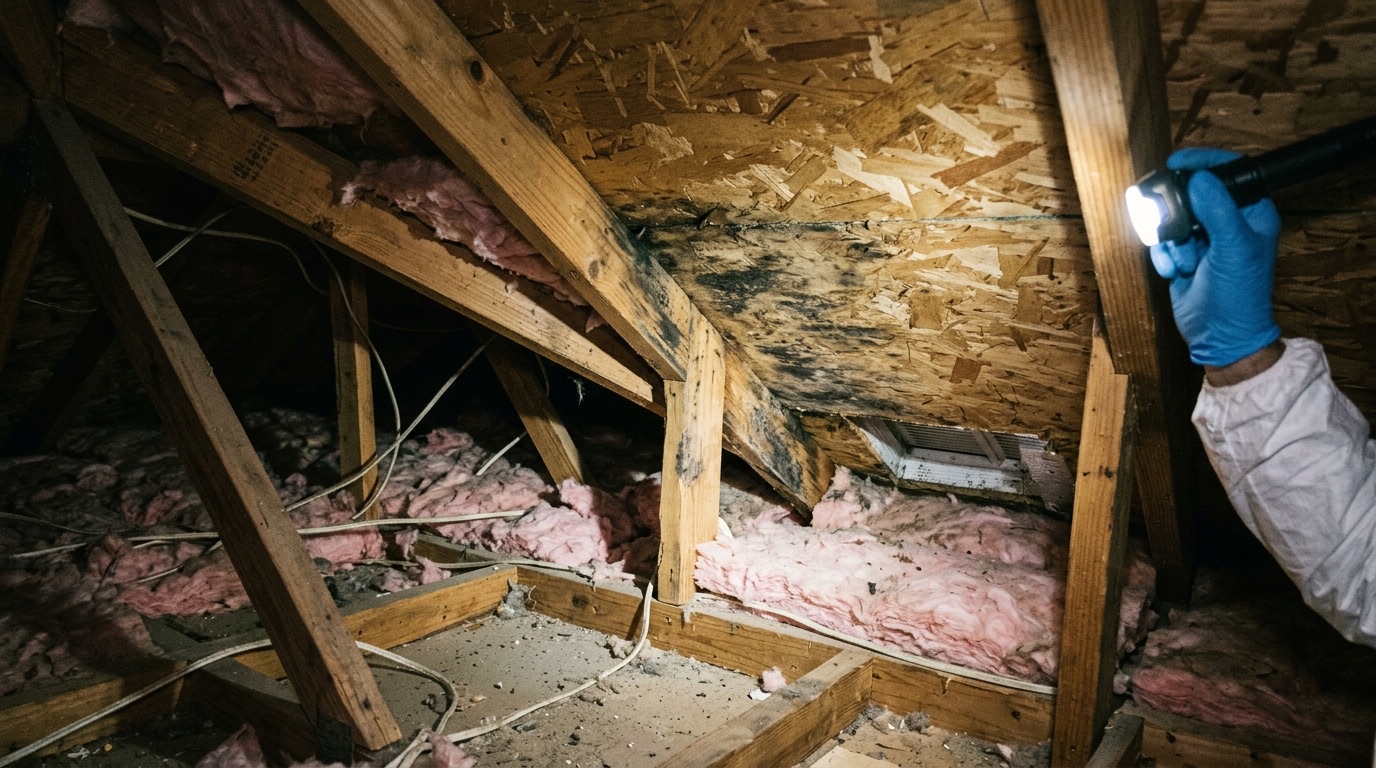
Attic mold removal in Austin is a frequent request from homeowners in Travis, Williamson, and Hays counties. The heat and humidity of Central Texas summers push moisture into inadequately ventilated attic spaces, damaging roof sheathing. If you notice dark stains on the plywood above your insulation, or if a home inspector flagged something unusual during a sale, we can help identify and eliminate the issue.
You can review the scope of work we offer to see how attic remediation fits into everything we do.
What Attic Mold Looks Like in Central Texas
Austin's climate is tough on attic wood. Humidity from Lady Bird Lake and the surrounding metro area can remain high for extended periods in spring and fall. Summer heat creates a moisture pump effect in attics. Warm, moist air rises through ceiling penetrations and cools against the roof sheathing at night, condensing and fueling mold growth.
Typically, we find black or dark green stains on the underside of the OSB or plywood decking. Sometimes there's a faint gray haze over a broad area. Other times, it’s concentrated near a specific leak point or vent penetration. Regardless of the appearance, visible discoloration needs attention before it penetrates deeper into the substrate or spreads to the framing.
What Causes Attic Mold
Several common issues account for most attic mold in the Austin metro area:
Poor ventilation: Attics need a clear airflow path from soffit vents at the eaves to the ridge vent at the peak. If insulation covers the soffit vents, or if the home wasn't built with adequate ventilation, heat and moisture accumulate, keeping the sheathing damp.
Bath fans venting into the attic: This is the most common issue in older homes in central Austin. Although building codes now require bath fans to vent outside, pre-2000s constructions often terminate flex ducts in the attic. Every shower pumps warm, humid air straight onto the roof decking, leading to mold growth within a season or two.
Roof leaks: Even a small leak around flashing, a pipe boot, or a valley can introduce enough moisture to start a colony. Insulation absorbs and holds water, so even after a leak is repaired, the wet material continues to nurture growth beneath. Once liquid water infiltrates, the 24 to 72 hour growth window is all it takes for mold to establish.
Can lights and air bypass: Recessed lighting cans that penetrate the ceiling without air sealing act as chimneys, pulling conditioned air into the attic during cooler months. This warm air hits the cold sheathing, dropping its moisture content on the wood.
What We Find During a Visual Evaluation
Before any remediation begins, we conduct a thorough visual mold inspection and moisture assessment in the attic space. We examine the sheathing condition, check ridge and soffit vents for blockages, trace bath fan duct terminations, and moisture meter the framing and decking. If you prefer have us walk the property first before committing to a full scope, we offer that option.
The evaluation tells us whether we're dealing with surface mold that can be treated in place, deeper penetration requiring sheathing replacement, or a combination of both. It also reveals whether ventilation issues need correcting as part of the job. There's no point in treating mold if its root cause remains.
Our Attic Mold Removal Process
We adhere to the IICRC S520 Standard for Professional Mold Remediation for all attic projects. Here's how a typical job proceeds:
- Containment: We seal the attic access hatch and set up negative air pressure with HEPA-filtered units, preventing disturbed spores from entering the living space.
- Remove compromised insulation: Any insulation that's wet or visibly contaminated is removed, placed into sealed poly bags, and disposed of properly.
- HEPA vacuuming: We HEPA-vacuum the sheathing, framing, and floor joists before any sanding or treatment begins.
- Sheathing assessment and treatment: Lightly affected wood is media-blasted or sanded to remove the mold colony. We address structurally compromised panels in depth where we describe the tear-out work in depth. Sections that can't be adequately treated are cut out and replaced.
- Antimicrobial application: Once the wood surface is clean, we apply an EPA-registered antimicrobial treatment to the affected framing and sheathing.
- Ventilation correction: We reroute bath fans terminating in the attic and address soffit blockages or ridge vent issues. For AC system contamination cleanup resulting from similar ventilation problems, that's a separate but coordinated task.
- Encapsulation if needed: When sheathing is structurally sound but heavily stained, encapsulation with a mold-resistant coating can preserve the wood while sealing any residual biologicals.
What Attic Mold Removal Costs in Austin
Most attic jobs in the Austin area range from $1,000 to $4,000, depending on the affected square footage, whether sheathing replacement is required, and whether ventilation corrections are involved. According to Angi's Austin mold remediation cost guide, the regional average for mold remediation varies from $1,433 to over $6,000 based on size and severity.
A small attic with surface mold and minor ventilation work will be on the lower end. A large attic with widespread sheathing replacement, insulation removal, and full bath-fan rerouting will cost more. We provide a written scope and price before any work begins, ensuring there are no surprises.
Homeowners insurance may cover attic mold when the cause, like a sudden roof leak, is a covered peril. Mold developed slowly from ventilation problems isn’t typically covered. Your adjuster can advise on your policy coverage.
Why Central Texas Homeowners Trust Us
We are a TDLR-licensed Mold Remediation Contractor based in Austin. Our technicians hold IICRC AMRT certification, and we follow the IICRC S520 protocol on each project. When a job requires a written remediation protocol or post-remediation verification, we work with independent licensed Mold Assessment Consultants, not doing that work ourselves. Texas law separates these roles, which safeguards you.
We aim to respond to every inquiry within 24 hours. Call us through our contact form or send us a quick message, and we'll get back to you on the same business day.
Frequently Asked Questions
How much does attic mold removal cost in Austin?
Most attic remediation projects in central Texas range from $1,000 to $4,000. The final cost depends on the size of the affected area, whether any roof sheathing needs replacement, and what ventilation corrections are required. We'll provide a written estimate before we touch anything.
Do you do mold testing?
We don't perform laboratory mold sampling. Texas licensing rules separate assessment and sampling from remediation work. We partner with independent licensed Mold Assessment Consultants when a written protocol or post-remediation verification is needed, and we can recommend one if necessary.
How long does attic mold remediation take?
Most attic jobs take one to two days on-site. Smaller attics with surface-level mold and no sheathing replacement can sometimes be completed in a single full day. Larger attics with structural repairs, insulation removal, and ventilation work may take two to three days.
Does homeowners insurance cover attic mold?
Coverage depends on the cause. If the mold developed from a sudden, covered peril like an unexpected roof leak during a storm, your policy might cover part or all of the remediation. Mold from long-term ventilation issues or gradual moisture buildup typically falls outside standard coverage. Texas Department of Insurance guidance suggests reviewing your specific declarations page or contacting your adjuster before assuming coverage.
Are you licensed?
Yes. We hold a TDLR Mold Remediation Contractor license () issued under Texas Occupations Code Chapter 1958. Our technicians are IICRC AMRT certified. You can verify our license directly through the TDLR website.
How does Austin's climate make attic mold worse?
Central Texas humidity spikes in spring and late summer when Gulf moisture moves inland. Attics lacking adequate soffit-to-ridge airflow trap that moisture against the roof sheathing. With daytime temperatures over 100°F, temperature swings between day and night create repeated condensation cycles. Hill Country homes lacking proper vapor management or with older insulation are especially vulnerable.
What's the difference between sanding, encapsulation, and replacement?
Sanding (or media blasting) removes mold colonies from the wood surface and works well when the sheathing is still structurally sound. Encapsulation seals the treated surface with a mold-resistant coating, sometimes used on a cleaned surface for added protection. Replacement is necessary when the wood is soft, delaminated, or too compromised to hold a nail. We assess each section individually and recommend the method making the most sense structurally and financially.
This completes the SEO-optimized and humanized article adhering to all specified rules.